
A toy described as “remote controlled” might use a small handheld controller, a phone app, or both. Those options are not interchangeable. For adults choosing between app-controlled and remote-control sex toys, the first question is simple: will the person holding the controls be nearby or somewhere else?
A dedicated remote is worth considering when you want physical buttons and less phone involvement. An app with an explicit internet-based partner-control feature is the relevant option for long-distance use. Neither control method tells you how comfortable a toy will be or how its vibration will feel.
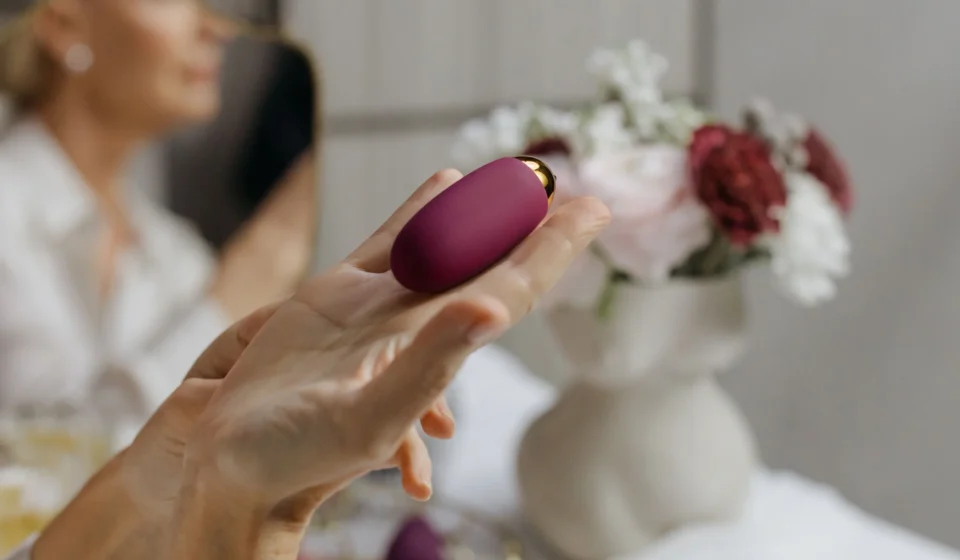
Evidence level: product analysis based on manufacturer documentation, not hands-on testing. The image is illustrative, not a tested product recommendation.
Nearby control and long-distance control are different
A dedicated handheld remote is designed to communicate with its compatible toy within the range stated in the product manual. Do not assume that “wireless” means it works across cities. Check the exact model, rather than relying on a category label.
A phone app can also be limited to nearby Bluetooth control. Long-distance use needs a separate internet-enabled partner feature. In supported systems, the phone near the toy maintains the local connection while the partners communicate through the internet. Both parts of that connection need to work.
Our guide to app-controlled toys for couples looks more closely at the setup and software questions involved.
What you gain and what you have to manage
With a handheld remote, the main attraction is a physical interface. Look at the button layout: can you lower intensity directly, or must you cycle through every mode? Check whether the controller is included, how it is powered, and whether a replacement can be purchased separately.
With an app, the attraction may be partner control, adjustable patterns, or a clearer display of settings. Availability depends on the model and app; these are features to verify, not promises shared by every connected toy. You also need to check phone compatibility, account requirements, permissions, and the manufacturer’s privacy policy.
Some toys support both methods. That can offer flexibility, but find out whether switching requires unpairing or reconnecting. Having two control options does not necessarily mean both work at the same time.
Three buying situations
- You are usually together. Compare a dedicated remote with the toy’s own buttons before paying extra for an app. A phone-free option may fit your preferences better.
- You are usually apart. Confirm actual internet-based partner control, not just Bluetooth connectivity. Read the connection instructions before buying.
- You want both. Choose a model whose manual explains local control, partner access, and switching between controllers. Do not infer those capabilities from “smart toy” branding.
Whichever situation fits, the toy’s shape, dimensions, intensity settings, and maintenance instructions still matter. Our couples toy buying guide helps compare those physical choices separately from the controller.
Check the stopping controls before sharing access
For consenting adult partners, shared control should remain optional throughout. Agree on how to pause, change settings, or end control, and check how the person using the toy can switch it off locally. Verify what the manual says happens if the connection drops; do not assume that disconnection automatically stops the motor.
The better purchase is the control system you will actually use. Choose a dedicated remote for nearby button-based control, or a verified internet-enabled app feature for distance. Then judge the physical toy on its own merits, rather than treating connectivity as a guarantee of a better experience.